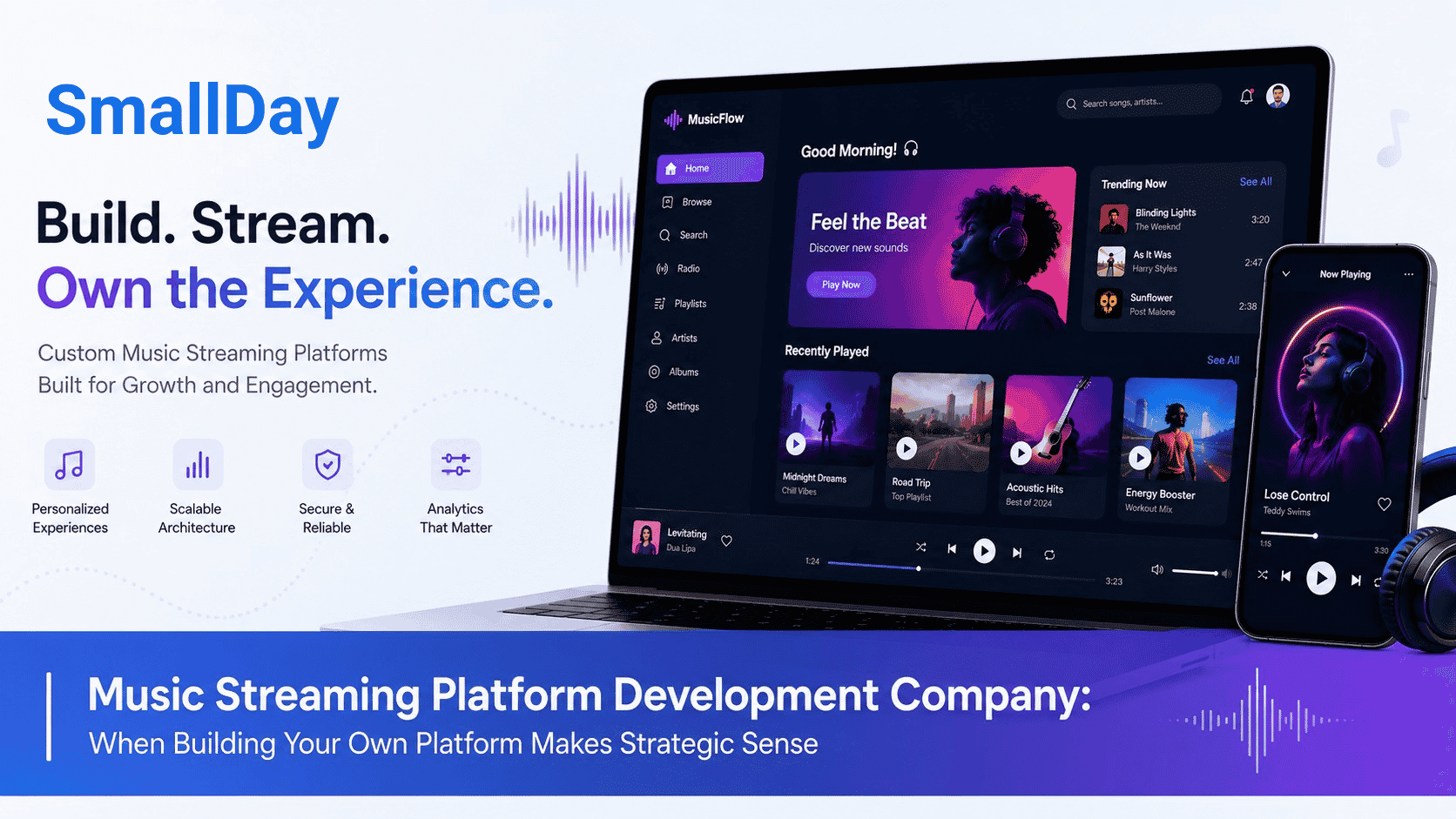
The way people discover and consume music has changed significantly over the last few years. Streaming has become the preferred way for audiences to access songs, podcasts, and other audio content, creating new opportunities for businesses that want to build stronger digital experiences around music.
However, launching a music streaming platform is not simply about creating an application that plays audio files. Businesses need to consider their audience, content strategy, revenue model, licensing requirements, technology infrastructure, and long-term growth plans before deciding whether building a dedicated platform is the right approach.
This is where a music streaming platform development company can help businesses evaluate the right technology strategy. While a custom platform can provide greater control and flexibility, it may not be the ideal solution for every organization. In many cases, existing streaming services or white-label solutions may already address standard requirements effectively.
The right decision depends on understanding what the business wants to achieve and whether a dedicated platform provides meaningful value.
Understanding the Growing Demand for Music Streaming Platforms
The music industry has moved beyond traditional distribution models. Artists, record labels, media companies, educational institutions, fitness brands, and entertainment businesses are exploring digital platforms to connect with audiences in more personalized ways.
For many organizations, the goal is not necessarily to compete with large global streaming services. Instead, they may want to create a niche experience focused on a specific audience, exclusive content, regional music, branded entertainment, or community engagement.
For example, a music academy may require a private streaming environment for students, while a media company may want a platform to distribute exclusive audio content. Similarly, brands may explore music platforms to strengthen customer engagement through personalized experiences.
In such scenarios, owning a dedicated streaming platform can provide more control over user experience, branding, analytics, and monetization strategies.
Many organizations are also exploring OTT music platform capabilities to deliver premium audio experiences directly to their audiences. Combined with modern cloud streaming solutions, businesses can securely distribute music across multiple devices, improve content availability, and scale their platforms as their listener base grows. These technologies provide the flexibility needed to support evolving business models without compromising performance or user experience.
When Building a Dedicated Music Streaming Platform Makes Sense?
A dedicated music streaming platform becomes valuable when businesses have requirements that existing platforms cannot fully support.
One common reason is the need for greater control over the customer experience. Third-party platforms provide access to large audiences, but businesses have limited control over interface design, user journeys, recommendation systems, and engagement features.
A custom platform allows organizations to design experiences based on their specific audience. This may include personalized playlists, subscription models, artist profiles, exclusive content libraries, offline listening, community features, or integration with other digital services.
Another important factor is ownership of user data and insights. A dedicated platform can help businesses understand listening patterns, content performance, and audience behavior, enabling better decisions around content strategy and customer engagement.
However, these benefits need to be evaluated against investment, maintenance requirements, and business goals.
When Existing Platforms or White-Label Solutions May Be Better?
Building a streaming platform is not always the most practical choice.
Many businesses simply need a way to distribute music content to audiences without requiring complete control over the platform experience. In such cases, established streaming services or white-label solutions may provide sufficient functionality with lower development effort.
For independent artists, small content creators, or businesses testing a new idea, using existing platforms can be an effective way to validate demand before investing in a larger technology project.
Similarly, companies with limited technical resources may prefer solutions that handle infrastructure, security, and maintenance requirements without requiring dedicated development teams.
The key is not choosing custom development because it is more advanced, but choosing the approach that aligns with business objectives.
Comparing Different Approaches for Music Streaming Platforms
Before investing in technology, businesses should evaluate the advantages and limitations of different options.

A technology decision should always be based on business needs rather than selecting the most complex solution available.
Planning a music streaming platform but unsure which approach fits your business? Before investing in development, it's worth evaluating your audience, business model, and long-term goals. A well-planned technology strategy can help you choose the right solution from the start.
How AI Is Transforming Music Streaming Experiences?
Artificial intelligence is becoming an important capability within modern music platforms. While the foundation of a streaming service is content delivery, AI helps improve how users discover and interact with that content.
AI-powered recommendation systems can analyze listening behavior, preferences, and engagement patterns to suggest relevant songs, playlists, or artists. This creates a more personalized experience and helps users discover content they are more likely to enjoy.
Beyond recommendations, AI can support areas such as automated content categorization, voice-based search, audience analytics, and trend prediction. These capabilities allow businesses to better understand their listeners and improve platform engagement.
However, AI should be implemented with a clear purpose. Not every platform requires advanced AI features from the beginning. Businesses should first identify where intelligent capabilities can create measurable value for users and operations.
Key Factors to Consider Before Developing a Music Streaming Platform
Before starting development, businesses should evaluate several important factors.
The first consideration is the target audience. A platform designed for mainstream listeners will have different requirements compared to a niche platform serving a specific community or industry.
Content management is another important area. Businesses need to consider how music rights, licensing, content organization, and distribution will be handled.
Technology scalability also plays a major role. As the user base grows, the platform must support increasing traffic, content libraries, and user activity without affecting performance.
Security, user experience, payment integration, and analytics capabilities are equally important when building a sustainable streaming ecosystem.
A Balanced Technology Approach from SmallDay Tech
At SmallDay Tech, the focus is on helping businesses identify the right technology approach based on their actual requirements. The objective is not to recommend custom development in every situation but to understand whether a dedicated platform, existing solution, or hybrid approach provides the best value.
For some businesses, building a custom streaming platform can create opportunities for differentiation and long-term growth. For others, integrating existing solutions may be a more practical path.
By evaluating business goals, audience expectations, and technical requirements, organizations can make informed decisions that support sustainable digital growth.
Conclusion
A music streaming platform can provide significant opportunities for businesses looking to create personalized digital experiences, strengthen audience relationships, and develop new revenue models.
However, building a dedicated platform is not always the right choice. The decision depends on factors such as business objectives, audience needs, content strategy, and long-term technology plans.
The most successful digital platforms are not created by simply following industry trends. They are built by choosing a technology approach that solves real business challenges and creates meaningful value for users.
FAQs
What does a Music Streaming Platform Development Company do?
A music streaming platform development company helps businesses design and develop digital platforms for delivering music content, managing users, supporting subscriptions, and creating personalized listening experiences.
Is building a custom music streaming platform better than using existing platforms?
It depends on business requirements. Custom platforms provide greater control and flexibility, while existing platforms may be more suitable for businesses focused on quick distribution and lower investment.
How does AI improve music streaming platforms?
AI helps improve music discovery through personalized recommendations, content analysis, predictive insights, and better user engagement experiences.
What features should a music streaming platform include?
Common features include music libraries, search functionality, playlists, user profiles, subscriptions, analytics, recommendations, and multi-device access.
How much does it cost to develop a music streaming platform?
The cost depends on factors such as platform complexity, features, integrations, content management requirements, scalability needs, and development approach.
Building a successful music streaming platform starts with choosing the right technology strategy. Whether your goal is to create a specialized audio experience, improve audience engagement, or explore new digital opportunities, the right approach depends on your business requirements.
SmallDay Tech helps businesses evaluate their technology needs and develop practical solutions that align with their goals, whether that involves a dedicated streaming platform, integrations, or scalable digital enhancements. Connect with our team to explore how the right technology approach can support your music and entertainment vision.